
Kingwood Root Zone Calculation for TPZ Fencing: Compliance Guide
Lake Houston Fence Rentals specializes in precise Tree Protection Zone (TPZ) calculations for Kingwood construction projects. Our expert team navigates the complex landscape of Kings Crossing and Kingwood Town Center, ensuring municipal compliance and protecting critical root systems with scientific accuracy and local expertise.
Root Zone Calculation for TPZ Fencing: Compliance Guide
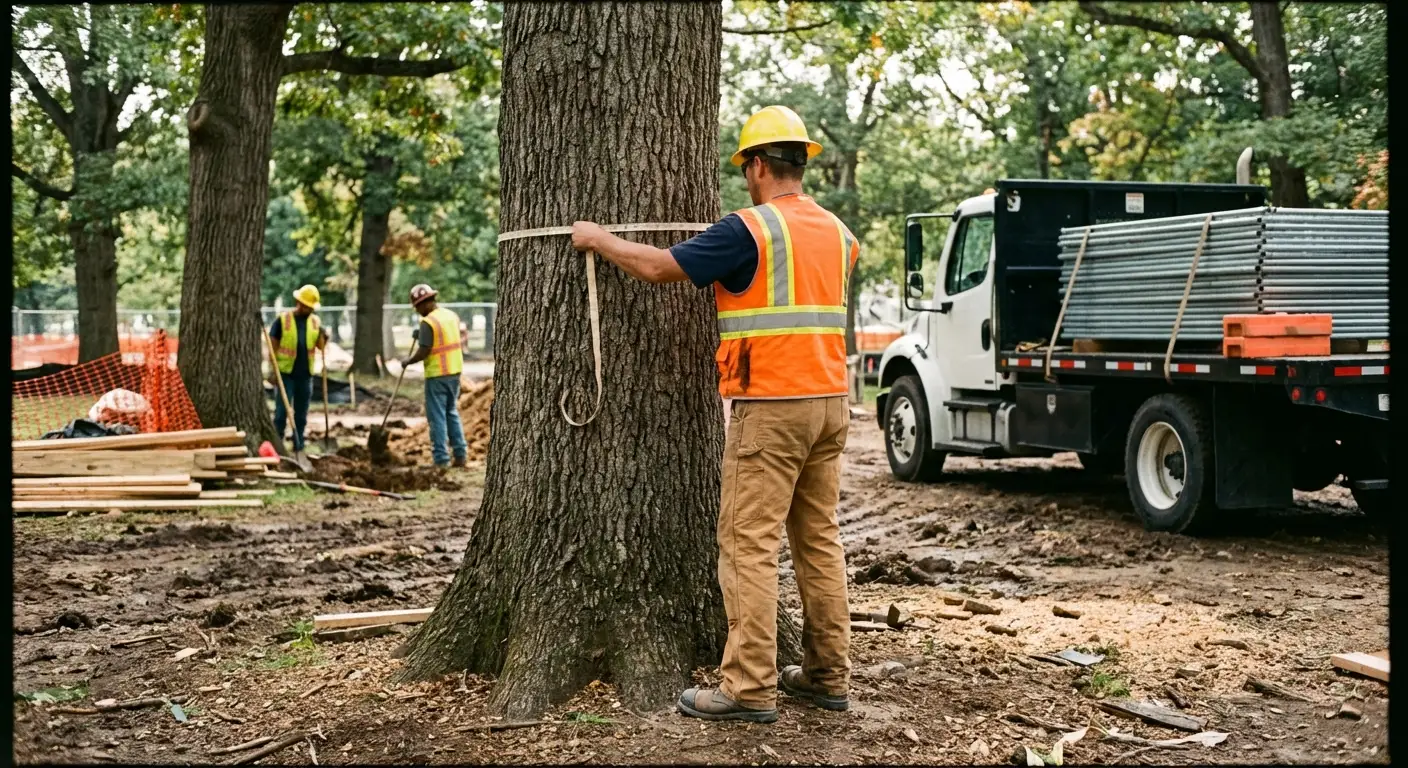
When setting up Tree Protection Zone (TPZ) fencing in Kingwood, TX, the root zone calculation is critical to preserve tree health and meet local regulations. We measure from the trunk out to the drip line, or sometimes beyond, depending on the tree species and age. This ensures the fence stays clear of vital roots, preventing compaction or damage during construction. Our crew uses laser distance meters and stakes to mark the exact perimeter, then installs TPZ fencing that complies with Kingwood Town Center and Kings Crossing site requirements. This method reduces stress on important trees around Lake Houston neighborhoods, especially in older areas with large established roots from the 1980-2000 expansion era.
Calculation Steps
- Identify tree species and age for root zone radius
- Measure from trunk to drip line with laser distance meter
- Mark perimeter with stakes and flagging tape
- Install TPZ fencing outside critical root zone
- Verify fence placement against local ordinances
- Communicate with site manager about tree protection
- Inspect regularly for fence stability and damage
| Step | Action | Tools/Notes |
|---|---|---|
| 1 | Assess tree characteristics | Visual inspection, species ID guide |
| 2 | Measure root zone radius | Laser distance meter, measuring tape |
| 3 | Mark perimeter | Wooden stakes, flagging tape |
| 4 | Set up TPZ fencing | Temporary fence panels, clamps |
| 5 | Confirm compliance | Local ordinance checklist, site plan |
Root Zone Calculation for TPZ Fencing: Compliance Guide — Part 2
Root zone calculation for TPZ fencing in Kingwood, TX, involves measuring a tree’s critical root area using trunk diameter at breast height (DBH) or dripline extent, then applying municipal buffers required by local ordinance. Fencing must be installed beyond this calculated zone to avoid root damage during construction near established neighborhoods like Bear Branch or Kingwood Lakes.
Key Terminology
- Tree Protection Zone (TPZ)
- Area around a tree trunk where root disturbance is restricted to preserve health.
- Dripline Radius
- Horizontal distance from trunk to outer edge of a tree’s canopy, often used in TPZ calculations.
- Root Zone Buffer
- Additional setback beyond TPZ required by Kingwood’s landscaping ordinances for construction fencing.
- Temporary Protective Fencing
- Non-permanent barriers installed around TPZs during construction to prevent equipment intrusion.
- Kingwood Tree Ordinance
- Municipal regulation governing tree preservation during development in neighborhoods like Bear Branch.
- Frost Line Depth
- Soil depth below which freezing does not occur; informs post placement outside TPZ in Kingwood Lakes.
In Simple Terms
Root zone calculation determines how far temporary fencing must be placed from a tree’s trunk to comply with Kingwood’s tree protection rules. The TPZ is typically based on trunk diameter or dripline, with added buffers in areas like Kings Crossing. Lake Houston Fence Rentals uses this data to position tree protection zones in Bear Branch, Kingwood Lakes, and Kings Crossing. Compliance avoids violations during projects near Kingwood Town Center Park. Installers reference tree protection ordinances and concrete steel bases to stabilize fencing outside sensitive root areas.
Root Zone Calculation for TPZ Fencing: Compliance Guide — Part 3
Guidelines for calculating root zones ensure TPZ fencing stability and compliance in Kingwood, TX.
| Root Zone Depth | Typically 18-24 inches for TPZ fencing to ensure stability in Kingwood soil conditions |
|---|---|
| TPZ Fence Post Spacing | 6 to 10 feet depending on fence height and wind load requirements |
| Soil Type Consideration | Clay and sandy loam soils common in Kingwood require deeper root zones for secure anchoring |
| Compliance Standards | Meets OSHA and local Kingwood regulations for temporary perimeter fencing |
| Root Zone Width | Minimum 12 inches diameter around each post for proper root zone calculation |
| Cost Range | $350-$600 per installation depending on site specifics and root zone depth |
| Signage Interval | Every 30 linear feet |
Need TPZ Fencing for Root Zone Compliance?
Kingwood, TX TPZ fencing for root zone protection and compliance.
Costly TPZ Fencing Errors We See in Kingwood (And Exactly How To Avoid Them)
After installing TPZ fencing across Bear Branch and Greentree since 2008, we've documented these recurring mistakes that jeopardize both compliance and tree health.
Ignoring species-specific root spread
We've seen contractors use generic TPZ distances in Bear Branch, only to find live roots protruding after storms. This violates Kingwood ordinances and risks killing heritage oaks.
Measure trunk diameter at 4.5' height, then multiply by species factor (1.5x for pines, 2x for hardwoods).
Using straight-line fencing around roots
Square fences near Kingwood Town Center Park damaged shallow feeder roots last summer. Angled cuts stress trees more than gradual curves during regrowth.
Our tree protection zones fencing follows root contours with modular panels.
Overlooking underground utilities in TPZ
A Greentree crew hit a gas line while driving posts last spring. Kingwood's clay soil hides decades of utility trenches that crisscross root zones.
Always scan with ground-penetrating radar before installing post-driven fence systems.
Neglecting wind load on TPZ barriers
Hurricane debris in Bear Branch proved standard barriers fail when roots shift. Uprooted panels become projectiles in 50+ mph winds.
Our wind-resistant fencing uses interlocking bases that flex with root movement.
Assuming all soil types drain equally
Kingwood's compacted clay holds water against roots longer than sandy soils. Trapped moisture breeds rot that spreads to protected trees within months.
Add drainage mesh when fencing in low-lying areas near Kingwood lakes.
Protecting the Canopy through Precise Root Zone Calculation
We've seen what happens when people ignore tree health during construction. After Hurricane Ike hit our neighborhoods, we learned that a healthy canopy is your best defense against debris. We treat every tree as a permanent asset, not an obstacle. We use math and proper equipment to ensure our tree protection zones keep the roots safe and the soil loose.
-
Critical Root Zone Delineation
We don't just eye it and hope for the best. We map out the actual drip line of the canopy to ensure our tree protection zones cover every inch of the sensitive area. This prevents soil compaction from heavy machinery or foot traffic that kills trees long before the fence even goes up.In PracticeI remember a job near Kingwood Lakes where we marked the zone precisely to save an old oak.
-
Non-Invasive Perimeter Setup
Driving stakes into the ground inside a protected zone is a rookie mistake that gets you in trouble with inspectors. We use concrete steel bases to provide stability without piercing the root system. This method keeps the ground loose and breathable for the tree's health.In PracticeUsing weighted bases instead of driven posts keeps the root structure intact during long-term installs.
-
Compliance with Local Ordinances
Every municipality has different rules about how far back you need to set your line. We follow the tree protection ordinances to the letter. This saves our clients from massive fines and stop-work orders when the city inspector rolls up to the site.In PracticeWe cross-reference site plans with local codes to ensure every tree protection zone meets legal requirements.
-
Soil Integrity Management
The dirt matters as much as the tree. We prevent heavy equipment from driving over the root zone by setting our chain link panels well outside the critical zone. This stops the soil from becoming packed like concrete, which suffocates the roots.In PracticeOur crew sets the perimeter far enough out to allow natural water drainage and air flow.
Our crew focuses on long-term stability for both your project and the local landscape, whether we're working in Kingwood Town Center or near Kings Crossing.
Root Zone Calculation for TPZ Fencing: Compliance Guide — Part 4
Understand practical root zone calculations for TPZ fencing in Kingwood, TX neighborhoods with local compliance considerations.
What is the importance of root zone calculation for TPZ fencing in Kingwood?
Root zone calculation ensures TPZ fencing installation avoids damaging tree roots, critical in Kingwood’s Greentree area where mature trees dominate residential lots.
How is the TPZ radius determined for trees near Lake Houston?
The radius equals 1 foot for every inch of trunk diameter measured at 4.5 feet above ground, a standard applied around Lake Houston’s protected zones.
Are there specific local regulations for TPZ fencing in Kingwood Town Center?
Kingwood Town Center requires adherence to city landscaping ordinances that mandate fencing outside the calculated root zone to prevent infrastructure and tree damage.
What complications arise when calculating root zones in Kings Crossing mixed-use areas?
Kings Crossing's mixed-use development often has compacted soil, requiring adjusted root zone calculations to avoid underground utilities and building foundations.
How does the era of buildings affect root zone fencing requirements in Kingwood?
Buildings from 1980_2000 often have established landscaping; TPZ fencing must accommodate existing root expanses to comply with city preservation policies.
What tools or methods are recommended for accurate root zone measurement by Lake Houston Fence Rentals?
Lake Houston Fence Rentals uses diameter tapes and laser distance meters for precise trunk measurements and root zone mapping in Kingwood’s varied terrain.
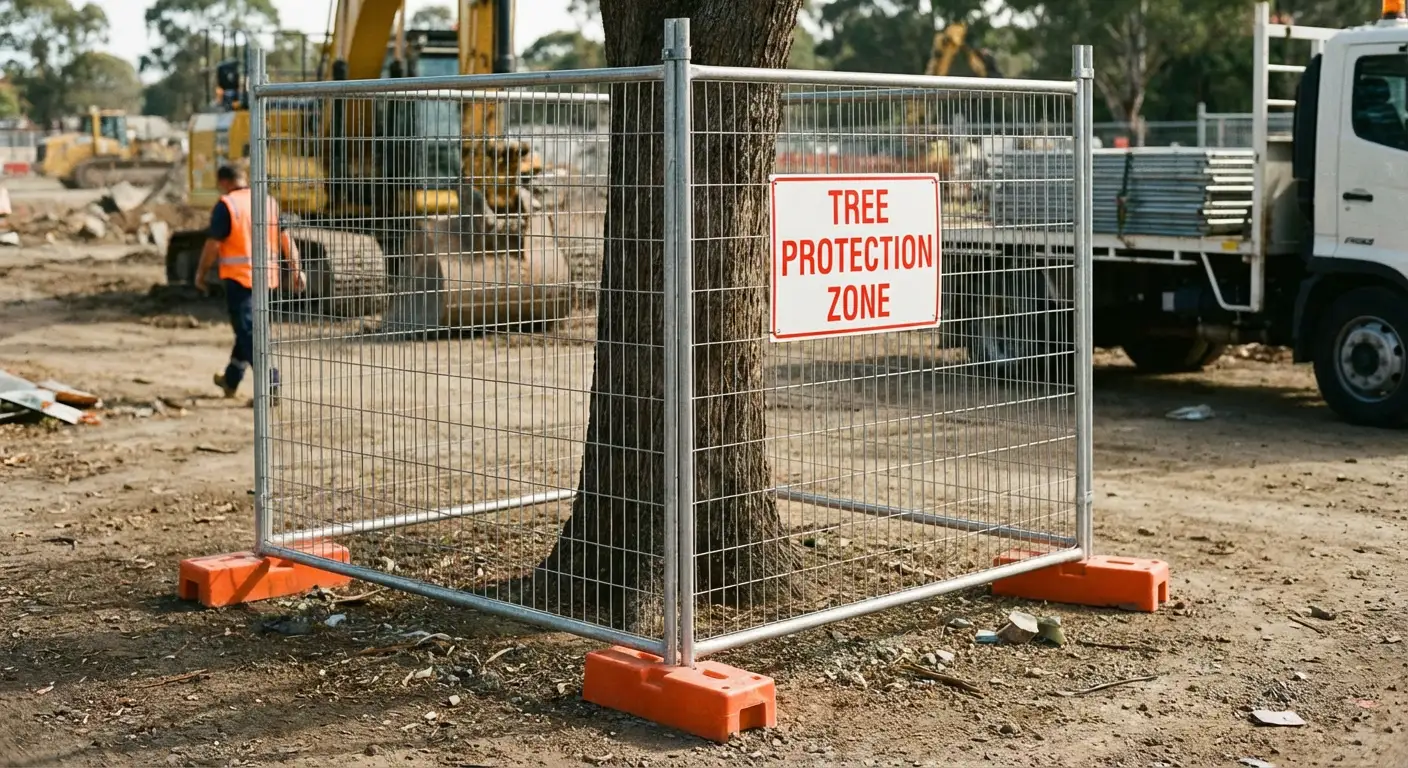
TPZ root zone calculations for compliant fence placement
Use root zone measurements to position TPZ fencing for Kingwood, TX projects and support OSHA-compliant tree protection during excavation.
Local Kingwood support for tree protection and fence placement.